
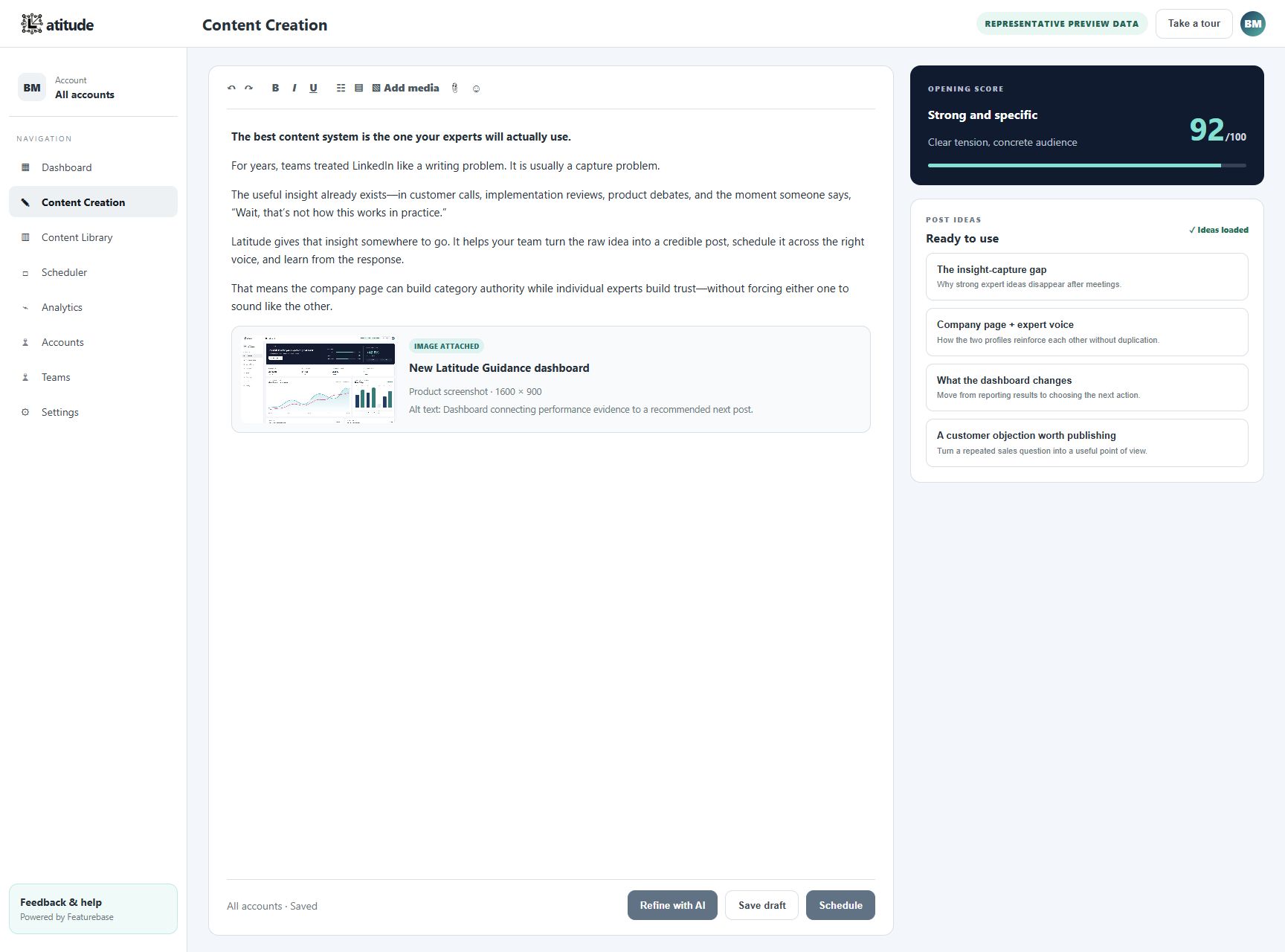
Most LinkedIn programs do not fail because the team has nothing useful to say. They fail because the useful ideas live in meetings, customer calls, Slack threads, and founder notes instead of a repeatable publishing system.
Latitude works best when there is a lightweight routine around those ideas.
Start with a weekly source list
Create one place where raw inputs can land during the week. Keep it simple:
- customer questions
- sales objections
- lessons from delivery work
- product releases
- founder opinions
- upcoming events
The goal is not polished writing. The goal is to keep strong ideas from disappearing before publishing day.
Turn ideas into post briefs before drafts
A good brief is faster to review than a full post. Capture the audience, the point of view, the proof, and the action you want the reader to take.
That gives AI enough direction to draft with intent, and it gives human reviewers a clean way to correct the angle before polishing language.
Protect each person's writing style
Consistency does not mean every post sounds identical. It means the same person or company shows up with a recognizable point of view. Keep a short voice guide with phrases to use, phrases to avoid, common stories, and the level of directness that feels right.
Use results to decide what to do next
Analytics are useful when they improve the next set of decisions. Look for which topics earn saves, profile views, comments, and relevant sales conversations. Then feed those observations back into the next weekly source list.
A publishing routine should reduce effort. If the routine is easy to maintain during a busy week, it has a chance to last.